
Discover Bhutan – the last Shangri-La
Everything you need to plan a trip to the Land of the Thunder Dragon – visas, SDF, seasons, getting there and etiquette, from a local team.
Bhutan is a Himalayan kingdom between India and China, known for Gross National Happiness, carbon-negative forests and living Buddhist culture. Visitors fly into Paro or enter by road at Phuentsholing, pay a daily Sustainable Development Fee, and travel with a licensed guide arranged by a tour operator.
| Capital | Thimphu |
|---|---|
| Currency | Ngultrum (Nu), pegged to the Indian rupee |
| Language | Dzongkha; English widely spoken |
| Time zone | Bhutan Time, UTC+6 |
| International airport | Paro (PBH) |
| Land entry points | Phuentsholing, Gelephu, Samdrup Jongkhar |
| SDF (2026) | USD 100 per adult per night (most visitors); Nu/INR 1,200 (Indian nationals) |
| Plug type | Types D, F and G, 230 V |
Why Bhutan is so special
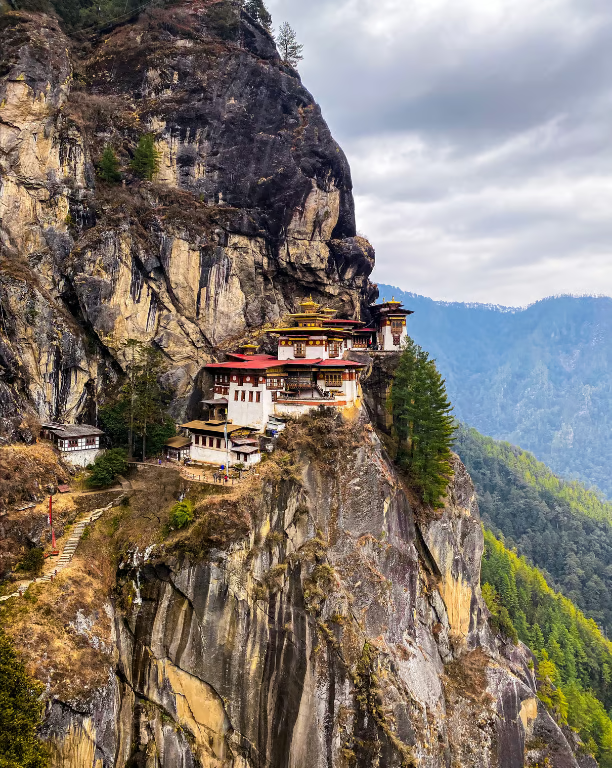
Nestled in the Eastern Himalayas, Bhutan offers a rare blend of untouched nature, deep spirituality and timeless traditions. It is the only country that measures progress through Gross National Happiness rather than GDP alone.
Entry rules
Apply for a Bhutan visa online before travel through your tour operator (fee USD 40). Your visa clearance letter is checked on arrival.
No visa needed. Get a free entry permit at Paro airport or Phuentsholing with a passport or voter ID card.
USD 100 per adult per night for most visitors (valid until August 2027); Nu/INR 1,200 for Indians. Ages 6–11 pay half; under 6 exempt.
International tourists travel with a licensed guide throughout; Indians need one for monuments and beyond Thimphu and Paro.
Getting there
Drukair and Bhutan Airlines fly to Paro from Delhi, Kolkata, Bagdogra, Guwahati, Kathmandu, Bangkok, Singapore and other cities. The landing between mountains is spectacular.
Fly to Bagdogra or take a train to NJP, then drive about 4 hours to Jaigaon / Phuentsholing.
Southern land borders from Assam, convenient for central and eastern Bhutan itineraries.
Seasons
| Season | Months | Weather | Why go |
|---|---|---|---|
| Spring | March – May | Mild, clear, rhododendrons bloom | Paro Tshechu, trekking, flowers |
| Summer | June – August | Warm, monsoon rain | Green valleys, Haa Summer Festival, fewer visitors |
| Autumn | September – November | Clear skies, best mountain views | Thimphu Tshechu, high treks, crane arrival |
| Winter | December – February | Cold, dry, sunny days | Black-necked cranes, Punakha Drubchen, quiet sites |
Etiquette
Long sleeves and long trousers or skirts at dzongs and temples; remove hats inside.
Circle chortens, temples and prayer wheels clockwise.
No photography inside temples; ask before photographing people.
Smoking in public places is prohibited; follow your guide's advice.
FAQ
All international visitors except Indian, Bangladeshi and Maldivian nationals need a Bhutan visa, applied for online in advance through a licensed tour operator. The visa fee is USD 40. Indian nationals receive a free entry permit on arrival with a passport or voter ID card.
Your daily cost combines the Sustainable Development Fee (USD 100 per adult per night for most international visitors, or Nu/INR 1,200 for Indians in 2026) with hotels, guide, vehicle and meals. Send us your dates for an exact quote.
Yes. Bhutan is considered one of the safest countries in Asia, with low crime and very friendly people. The main risks are mountain roads and altitude, which our drivers and guides manage.
The Bhutanese ngultrum (Nu), which is pegged 1:1 to the Indian rupee. Indian rupees are widely accepted (check current rules on large notes), and ATMs are available in main towns.
International tourists must travel with a licensed Bhutanese guide. Indian travellers need a licensed guide to visit monuments and to travel beyond Thimphu and Paro.
Dzongkha is the national language, and English is widely spoken – it is the medium of education. Nepali and Hindi are also commonly understood.
Layers for changing mountain weather, a warm jacket, comfortable walking shoes, rain gear in summer, sunscreen, and modest clothing (long sleeves and trousers or skirts) for dzongs and temples.
Price on request
Prices depend on your dates, group size, hotel category and season, so we quote every trip individually. Send this form or message us on WhatsApp and a Bhutanese travel expert from our Paro office will reply with a tailored itinerary and price.
Free, no-obligation quote
Tell us your dates and interests. A local Bhutanese travel expert replies with an itinerary and price.